
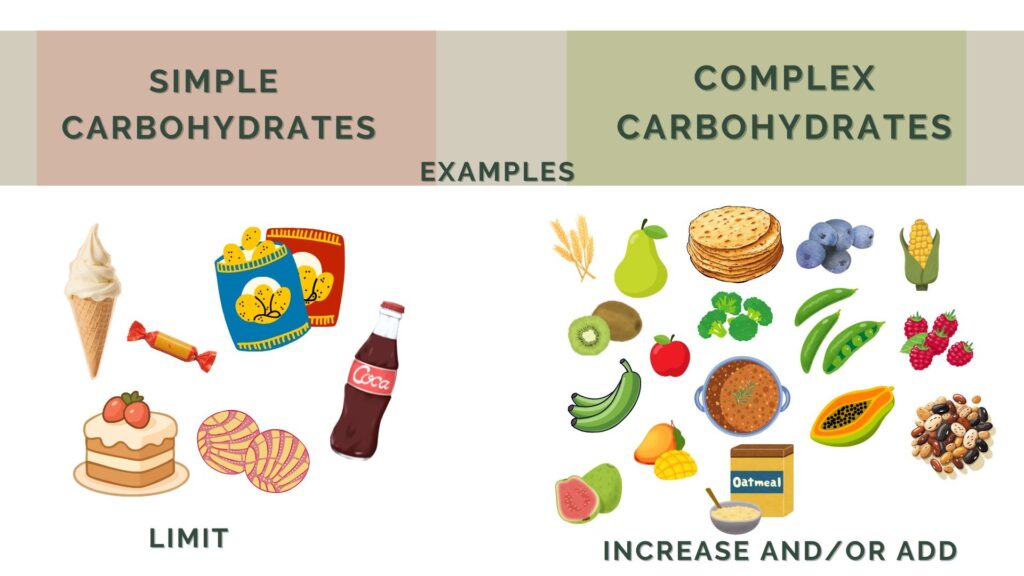
Carbohydrates (CHO) are the most misunderstood macronutrient. – Check out a visual guide at the end.
I want to help you understand the types of carbohydrates that exist and take away some of the confusion often associated with carbs. This can help you decide what kinds of carbs you want to include more of in your diet and which ones are the ones we don’t need a lot of.
The main and preferred source of energy for our brian and muscles and basically our entire body is carbohydrates. This is because when CHO breaks down it becomes glucose. Glucose is the molecule that can quickly be converted into adenosine triphosphate ( ATP).
ATP is what powers all biological processes. Think about when you are lifting weights in the gym or running. The energy used to power the muscles to contract is ATP. (1)
ATP can come from the other macronutrients like fat and protein. However, if fat is used it takes longer to produce, and ATP from protein is the least ideal as that means sacrificing proteins that can be used for building and restoration.
So does that mean we need to consume a lot of CHO to sustain our bodies? It depends.
Are you a marathon runner? Or are you trying to parent, work, and maintain an overall healthy dietary pattern? Do you have a family history of diabetes?
Those who use up a lot of energy in big chunks of time, do need to consume a lot of CHO and most often simple carbohydrates because they need the energy quickly.
Let’s talk about simple carbohydrates. (picture)

Simple because it’s just one strand and that means the breakdown is easier and quicker for the body. Glucose (sugar) enters the bloodstream quickly and therefore, if you are running a marathon you need that energy to go to your muscle cells ASAP.
However, if you are not exerting so much energy then simple sugars are something you need less than. And if you have lab work and a diagnosis of diabetes then you have to be more mindful of how much CHO you are eating and what you are combining the CHO with.
Let’s say you are a parent trying to carry out healthy dietary patterns where most of your foods are nutrient-dense, then complex carbohydrates is where you can get most of your body’s preferred energy. Simple carbohydrates can be part of your diet just in lower amounts.
Complex carbohydrates are composed of several nutrients, not just glucose.
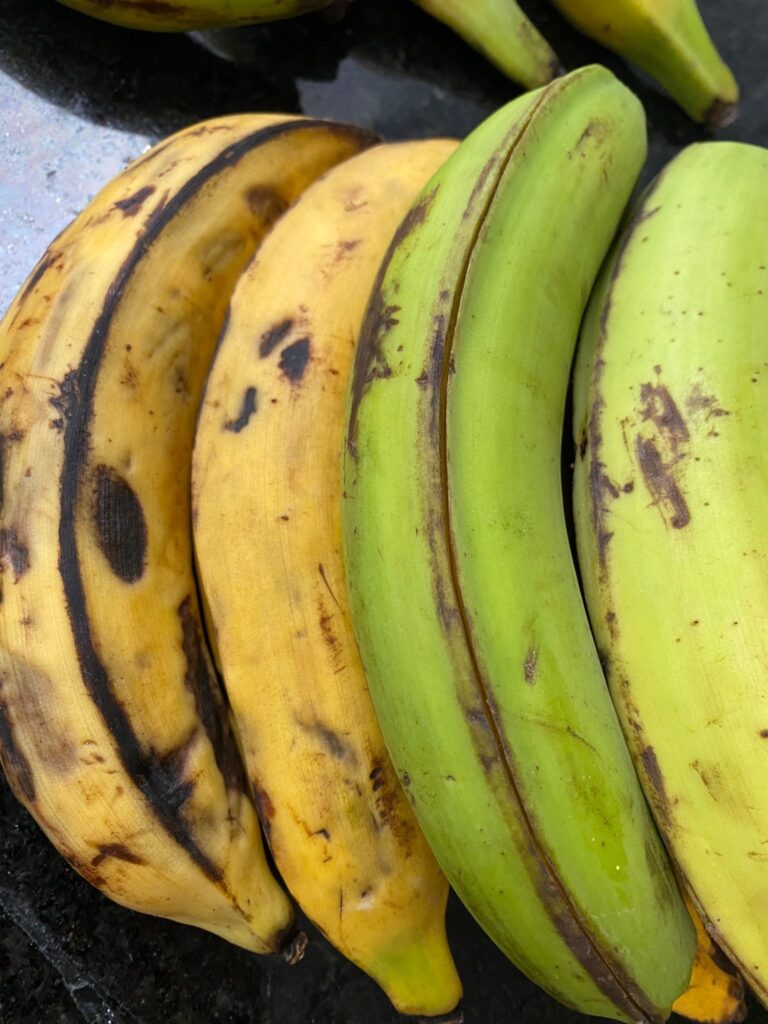
For example, plantains are starchy complex carbohydrates that also have protein, fiber, potassium, vitamin D, vitamin A, and magnesium. (2)
Jolly Ranchers are made of corn syrup, sucrose, glucose, or fructose syrup.(3) All of which are simple sugars that will break down quickly.
Although both are carbohydrates, one is complex and the other is simple.
So are carbs necessary ? Yes. Are all carbs the same? No.
Lets remember how complex carbohydrates are not just for producing glucose but also carry vitamins, minerals, and FIBER, all of which your body needs. Fiber is also a carbohydrate. However, it is not converted into sugar because it is not digested. If you want to learn more about fiber and its importance, click here.
SOURCES:
1)https://www.ncbi.nlm.nih.gov/books/NBK553175/