
Many of us are unaware or just don’t understand the uproar in the nutrition and wellness space lately.
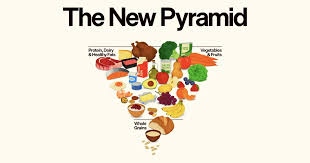
Let me start by stating that since 2011, The Myplate method has been used. The guidelines used a plate and replaced a modified version of a food pyramid that was called Mypyramid previously used. The Myplate guidelines prioritized whole foods over ultra-processed, and gave recommendations on how to approach your plate set up when creating meals. Although there were still areas of improvement like making dairy optional, prioritizing more water intake, and giving emphasis to cultural foods that are often combined and not separated by food groups. When looking at the new recommendations not much has changed. There were just more sensational words used and what appeared like a deliberate decision to compare the 1990s food pyramid to the new guidelines and no reference to Myplate.
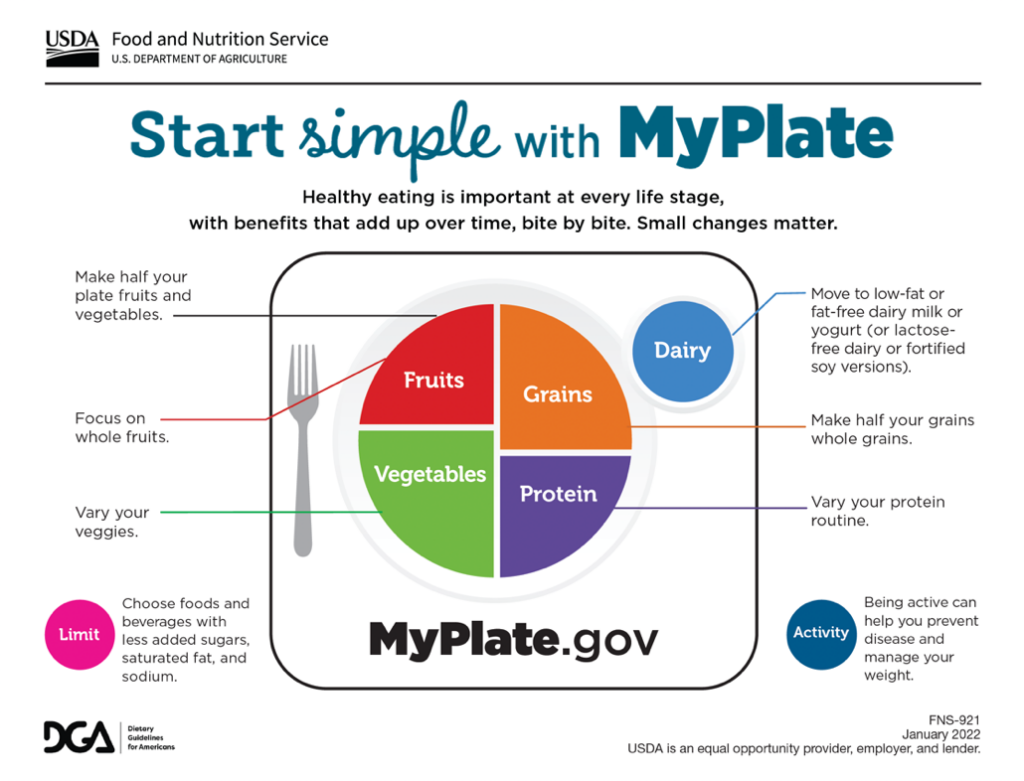
Picture one: Photo of the Myplate US Dietary Guidelines used from 2011-2025.
Other large institutions took Myplate and formed their own version. Harvard health came out with their own version. You can read more about it here. In my opinion, this version is more appropriate as general recommendations go.
Below are the new dietary guidelines for US Americans that have been released.
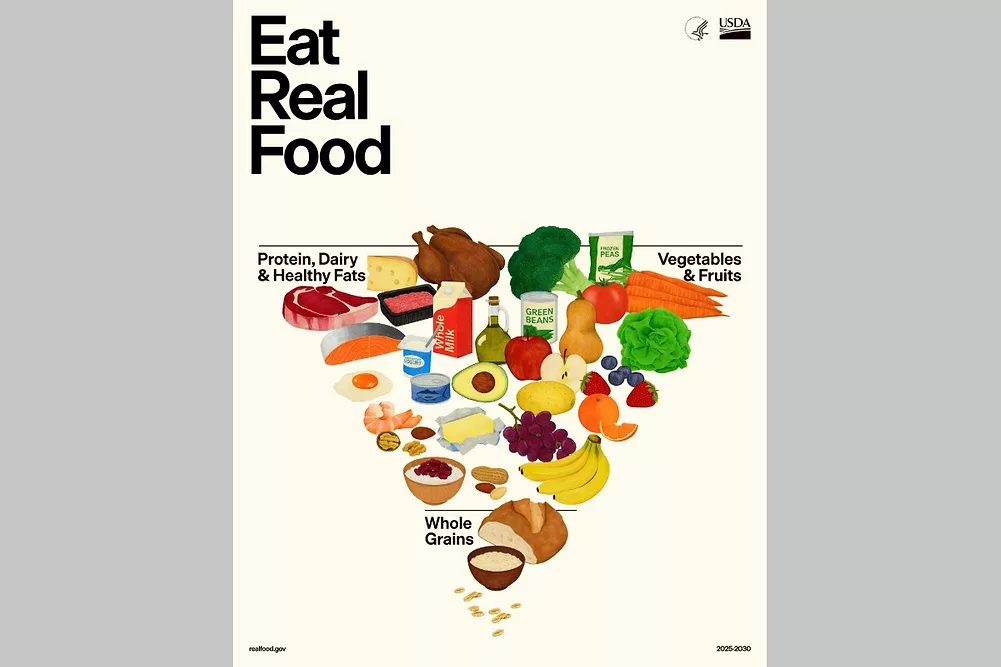
There seemed to be a plan in place to critique the food pyramid from the 1990s which was bizarre since Myplate were the guidelines in place for the last decades. HHS Secretary was interviewed referencing it as well as many influencers in the wellness space online. Now it makes sense since the plan was to come out with an inverted triangle and promote it as the new pyramid.
My two biggest concerns with the new dietary guidelines
1.The lack of emphasis on fiber. The fiber gap, in my opinion, is a public health crisis. According to national surveys, over 90% of US Americans are not meeting the daily recommended intake of 35-25 g per day. Source
After reviewing over 250 studies ( observational and clinical), a meta analysis concluded fiber significantly improves health. In observational studies they fiber helped lower deaths caused by cardiovascular diseases, coronary heart disease, stroke, type 2 diabetes, and colorectal cancer. In clinical trials they showed better weight management, better systolic heart pressure , and better total cholesterol when comparing those individuals who consumed higher amounts of fiber to individuals who ate less fiber. The data also revealed even greater benefits when consuming more fiber (~25g -29 g per day) to protect against cardiovascular diseases, type 2 diabetes, and colorectal and breast cancer. Source
My recommendation as a dietitian is to understand what foods are high in fiber and to select fiber-rich foods over supplements when possible. Also being aware of what works for your body. Some folks have functional disorders like Irritable Bowel syndrome, inflammatory conditions like Crohn’s, or specific food-related issues like Celiac Disease (gluten intolerance), lactose intolerance, and food allergies. Which means they have to be more mindful of the amounts and types of fiber-rich foods they eat. This is why understanding your body first will always be important.
The new guidelines fail to emphasize this and instead chose to put animal protein on the top which has zero fiber. and amounts are not specified or labeled as lean cuts. As more fatty red meats are eaten in large portions and over extended time do not lower triglycerides or cholesterol when compared to leaner cuts or plant-proteins.Source Both high levels of triglycerides and cholesterol are lead contributors to the number killer of US Americans, heart disease. Source
2. The disregard for the social determinants of health. Although there are big bold letters saying Eat more Real Food which it’s intent is for folks to not eat ultra-processed foods. It is no different than what the Myplate method stated. Also all processed foods are not created equal. We have to factor in context and individual needs. Second, the policies in place now for folks to eat real food on a consistent basis are not there. This means those real food options have to be readily available and affordable. This is not just a critique on these guidelines but on the previous as well. According to usafacts, in 2024 corn received $3.2 Billion or 30.5% of all federal farm subsidies. Corn feeds all US-produced feed grains for livestock, used in ethanol production, and used in products like sweeteners, corn oil, beverages, starch, and alcohol.
I would hope these new guidelines with the Real Food jargon indicate more money to small farms or programs that provide farm to table options which are filled with more fiber rich foods. This would help folks have more access and afford those foods. Perhaps, it might mean this administration will enforce polices on the big farms that would increase nutrient-dense foods. Unfortunately, I am not holding breath on this. I sadly doubt policy change will happen based on the funding previously shared and the confusion on what health equity means in their fact statement. Read this administration fact sheet here.
Without the former two, I fear that changing logos is all just for optics and not that real change is being put forth to really make America healthy again.
Facts about Dietary guidelines and funding
Alongside the fact that the dietary guidelines have always been political, let’s just dive a little into why that is and what this means for the next five years, which is the standard of when the guidelines are reviewed, revised, and/or updated.
The government’s dietary guidelines are mainly used in federal programs such as:
- Supplemental Nutrition Assistance Program (SNAP): The largest program, providing monthly benefits to low-income households to buy healthy food.
- Women, Infants, and Children (WIC): Offers supplemental foods, nutrition education, and healthcare referrals for low-income pregnant, postpartum, breastfeeding women, and children up to age 5 at nutritional risk.
Child Nutrition Programs:
- National School Lunch Program (NSLP): Provides low-cost or free lunches to children in schools.
- School Breakfast Program (SBP): Offers breakfast to eligible children.
- Child and Adult Care Food Program (CACFP): Serves meals and snacks in childcare settings.
- Summer Nutrition Programs (e.g., Summer Meals, SUN Bucks): Free meals and snacks for children in the summer months.
Nutrition Programs for Seniors:
Commodity Supplemental Food Program (CSFP): Distributes nutritious foods to low-income seniors.
Senior Farmers’ Market Nutrition Program: Provides fresh produce coupons.
Emergency Food Assistance Program (TEFAP): Distributes USDA commodities to food banks for emergency relief.
Our tax money is used to fund all of these programs. How much will be used currently is not known as the latest legislation aka The big beautiful bill was passed last year. The law holds many provisions and changes to the program’s eligibility and the amount of funding each program will receive.
A quick way to explain how funding works:
Authorizing Legislation: Laws like the Farm Bill set up the programs, while annual appropriations bills provide the actual money, notes.
Mandatory funds vs. Discretionary funds : Some programs, like SNAP, are mandatory (entitlements tied to eligibility), while others, like certain grants (e.g., Farm to School), are discretionary and need annual congressional approval.
So Congress decides how much is spent through laws passed, the President proposes, the USDA manages, and states deliver the programs.
If you are curious which state receives the most snap benefits click here.
Let us not forget that although scientists and nutrition expertise are used to advise the guidelines, many have strong ties to some of the biggest food corporations.You can read the full advisory report and their contributors here. And this has always been the case.
I believe now more than ever, understanding how our government works, especially in an area that can determine so many things for a human i.e nutrition is one thing we can control. I hope this blog brought you some clarity.
Please check out my blog about ultra-processed foods for more information.
Additional resources:
What is myplate – https://www.myplate.gov/eat-healthy/what-is-myplate